Galway, Ireland +353 1 454 2679
Zeduwue — About Us

Spending decisions
that actually hold

Zeduwue teaches budget prioritisation as a practical skill — not a theory. Our masterclasses are built around real financial decisions, with instructors who have made them.

4 Years running
live programmes
6 Distinct learning
tracks available
830+ Participants from
across Ireland
Instructor leading a budget prioritisation masterclass at Zeduwue

Where this started and what shaped it

Zeduwue learning environment showing participants working through financial scenarios

Zeduwue grew out of a straightforward observation: most people who struggle with money aren't missing information — they're missing a clear method for deciding what matters most when resources are limited. The founders, based in Galway since 2020, had spent years watching capable people make poor spending decisions not because they were careless, but because they had no structured way to think through trade-offs.

The early programmes were small and deliberately local. Groups of eight to twelve participants, working through real scenarios drawn from Irish household and small-business contexts. The feedback was consistent: the structure itself was the useful part. Having a repeatable process for ranking financial priorities made the decisions easier, and the reasoning more defensible.

That insight shaped everything that followed. The curriculum isn't built around generic financial literacy. It's built around the specific moment when you have to choose — between saving and spending, between competing obligations, between short-term relief and longer-term stability. Each masterclass is designed around that moment.

The virtual format came later, driven by demand from participants outside Galway who had heard about the programme through word of mouth. The online delivery kept what worked: small groups, live instruction, and scenarios grounded in recognisable situations rather than abstract examples.

Scenario-first learning

Every session opens with a real decision, not a definition. Participants engage with the problem before encountering the framework.

Small groups, live instruction

Sessions cap at 14 participants. The size allows instructors to address individual questions rather than delivering a broadcast.

Irish context throughout

Tax structures, housing costs, and income patterns relevant to Ireland appear throughout the curriculum — not as footnotes, but as the baseline.


The people who run the programmes

The instructors at Zeduwue aren't academics who study budgeting — they've worked directly with individuals and organisations navigating real financial constraints. That experience shows in how they teach.

14 Max participants per live session
8 Weeks — standard programme duration
3 Live Q&A sessions per track
IE All scenarios grounded in Irish context
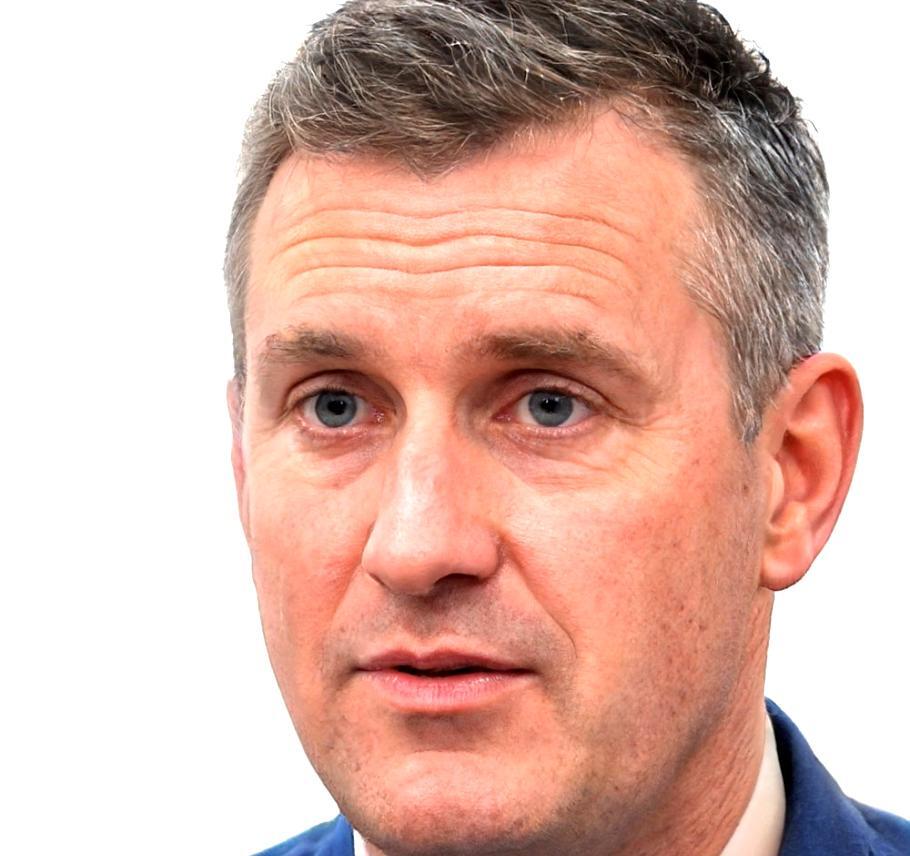
Portrait of Ciarán Ó Floinn, Lead Instructor at Zeduwue

Ciarán Ó Floinn

Lead Instructor — Budget Strategy

Ciarán spent eleven years advising small businesses across Connacht on cash flow and spending decisions before joining Zeduwue. He builds sessions around the moments where standard advice breaks down — when income is irregular, when obligations compete, when the numbers don't leave obvious answers.

Cash flow planning Irregular income Trade-off analysis
Portrait of Tomás Feeney, Programme Director at Zeduwue

Tomás Feeney

Programme Director

Tomás designed the curriculum structure that underpins every Zeduwue track. His background is in adult education, and he spent several years developing financial capability programmes for community organisations in the west of Ireland before moving into the masterclass format.

Curriculum design Adult learning Community finance

Aoife Brennan

Household Finance Specialist

Aoife leads the household-focused tracks, working primarily with participants managing family budgets across variable income. Her approach centres on building decision habits that hold up under pressure, not just in stable months.

Household budgets Family finance Decision habits

Ruairí Mac Giolla

Freelance & Self-Employment Track

Ruairí runs the programme strand for self-employed participants and freelancers — a group whose financial decisions are complicated by income that doesn't arrive in predictable amounts. He draws on his own decade of freelance practice alongside formal training in financial planning.

Freelance finance Tax planning Variable income

How the programme is structured

Each track follows the same underlying logic: start with a decision, build the reasoning, test it against harder versions of the same problem. The format is consistent — the scenarios change to match each participant group.

See the full programme
Participant working through a budget prioritisation exercise during a Zeduwue session
01

Opening with a real constraint

Sessions begin with a concrete scenario — a household with three competing financial demands and income that covers two of them. Participants work through the decision before any framework is introduced. The discomfort of not having an obvious answer is the starting point.

Visual of financial priority mapping used in Zeduwue masterclass
02

Building a repeatable method

The middle sessions introduce a structured approach to ranking financial priorities — not a formula, but a set of questions that make the reasoning visible and easier to revisit when circumstances change.